Cinema has been a cornerstone of human experience since the 20th century, shaping our imagination and perception much like literature and music. From silent black-and-white films to today’s OTT releases, cinema has traveled a long and fascinating path. One of its most revolutionary chapters is the arrival of 3D technology, perhaps the most debated and discussed innovation in film history. In Indian cinema, and especially Malayalam cinema, 3D sparked intense conversations. At the centre of it all stands My Dear Kuttichathan, India’s first 3D film.
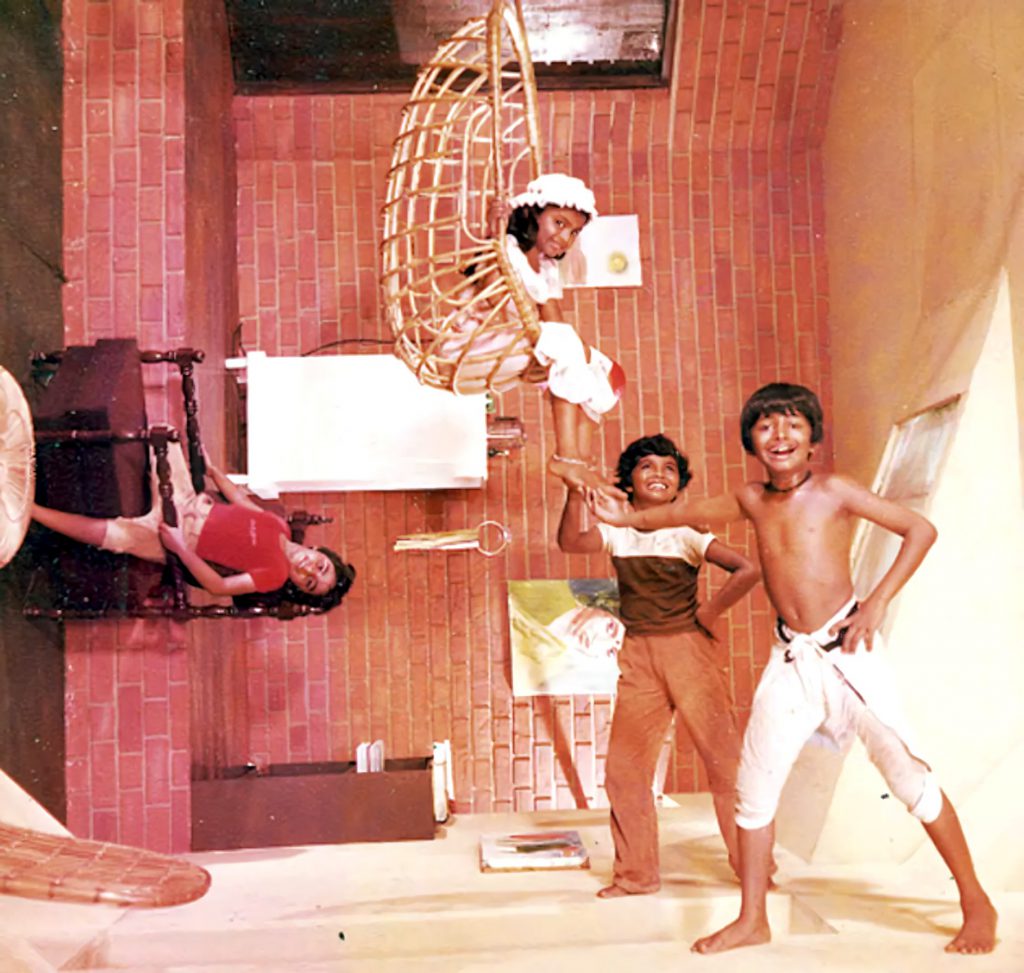
To clear up common misconceptions and myths, let’s dive deep into the 3D technology used in this landmark movie. First, a quick primer on 3D basics. Regular cinema is 2D, flat, with only length and width. 3D adds depth (the third dimension), mimicking real-life vision. Our brain creates a sense of depth by processing slightly different images from each eye. (People with vision in only one eye can’t experience true 3D, either in life or on screen, and studies show about 10% of people struggle with it due to various factors, especially older viewers with age-related eye issues.)True stereoscopic 3D requires two slightly offset views, one for each eye. To shoot in 3D, filmmakers use either two cameras mounted side-by-side on a rig or a single camera fitted with a special stereoscopic lens system that captures both left and right images simultaneously. (Contrary to some beliefs, it doesn’t require three cameras or three lenses.)
Over the years, playback technologies have included anaglyph (red-blue glasses from the early days), passive polarized systems (like today’s RealD), active shutter glasses, IMAX 3D, and even glasses-free lenticular displays. For shooting, early methods involved dual cameras on separate film stocks or over-under/ side-by-side formats on a single frame. With digital tech came post-conversion, turning 2D footage into 3D via rotoscoping and depth mapping (as in Gravity or India’s re-released Sholay in 3D). These conversions are expensive and time-consuming. Hollywood has seen 3D waves every decade or so. The 1980s revival kicked off with films like Comin’ at Ya! (1981).
Before that, 3D rigs were massive, with two cameras facing forward. Then came Chris Condon’s breakthrough: a compact stereoscopic lens attachment that fit standard 35mm cameras, allowing over-under (top-bottom) capture of left and right images on one film strip. This made shooting far easier. Projection also simplified, from dual synced projectors to single-projector systems with special optics. It was during this wave that Jijo Punnoose, son of Malayalam cinema legend Navodaya Appachan, traveled to Hollywood to study 3D. Inspired, he decided to make India’s first 3D film. He brought in Chris Condon himself as the stereographer. Using Condon’s Stereo-vision lens system attached to ARRI 2C and Reflex Mitchell cameras (Navodaya’s own equipment), shooting began. Cinematographer Ashok Kumar handled DOP duties, with David Schmier assisting as stereographer.
My Dear Kuttichathan was shot on standard 35mm film in the over-under format: the top half of each frame captured the left-eye image, the bottom half the right-eye image, both at an aspect ratio of approximately 1:2.35 per eye. For exhibition, Navodaya set up an elaborate system. A split lens was placed in front of the projector, polarising the left and right images differently. Projection went onto a silver screen (coated with special aluminium paint to preserve polarisation). After test reels and precise alignment, black masking was added around the screen edges. To counter light loss from the polarizing filters and 3D glasses, screen size was often reduced for brighter images. Viewers wore matching polarised glasses, allowing each eye to see only its intended image, creating the 3D illusion.
Navodaya even installed sterilisation machines in their theatres to clean glasses after every show, a level of hygiene that’s rare today, when theatres often hand out barely wiped glasses used by dozens. K.P. Nambyathiri, a prominent Malayalam cinematographer, was among the first in Kerala trained in stereo-vision. He wasn’t part of the original version but handled stereography for the revised Malayalam cut, plus the Hindi (Chhota Chetan) and Tamil versions. Later Indian 3D films like Annai Bhoomi, Pournami Raavil, and Siva Ka Insaaf used the Arrivision 3D lens system. The digital era brought more changes. In 2003, James Cameron developed the Fusion Camera System, a beam-splitter rig with two cameras for perfect alignment.
Today, most 3D films use similar digital rigs. Digital projection revived dual-projector setups for brighter, higher-quality 3D without shrinking screens. My Dear Kuttichathan wasn’t just a film, it was a bold technical achievement that put Indian cinema on the global 3D map. Myths persist, but the facts show a pioneering effort driven by vision, imported expertise, and sheer determination. In an era before CGI and digital tools, it proved that innovation could come from anywhere, even a small studio in Kerala.

Leave a Reply